
An AI-powered personal assistant web application that accepts text and image tasks, reasons about intent using Gemini (Vertex AI), and automatically executes workflows across Google Workspace tools.
brAIny
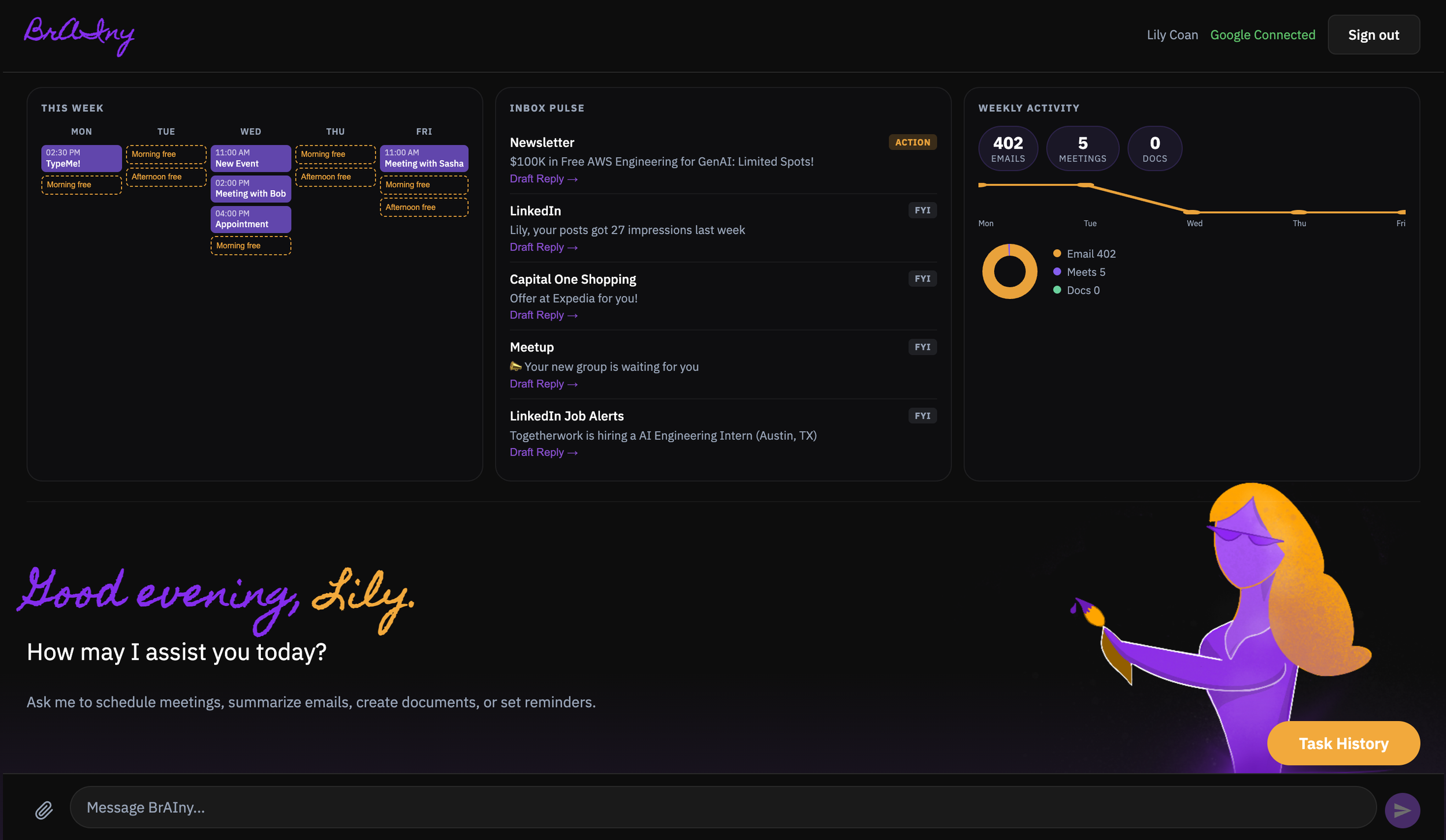
Key features:
Full multi-turn conversation with persistent context stored in Firestore per authenticated Google user- BrAIny remembers open tasks, recent actions, and user preferences across sessions
Live-streamed responses via SSE so replies feel real-time, with inline action confirmation chips when Workspace tasks execute (e.g. "✓ Email sent", "✓ Meeting scheduled")
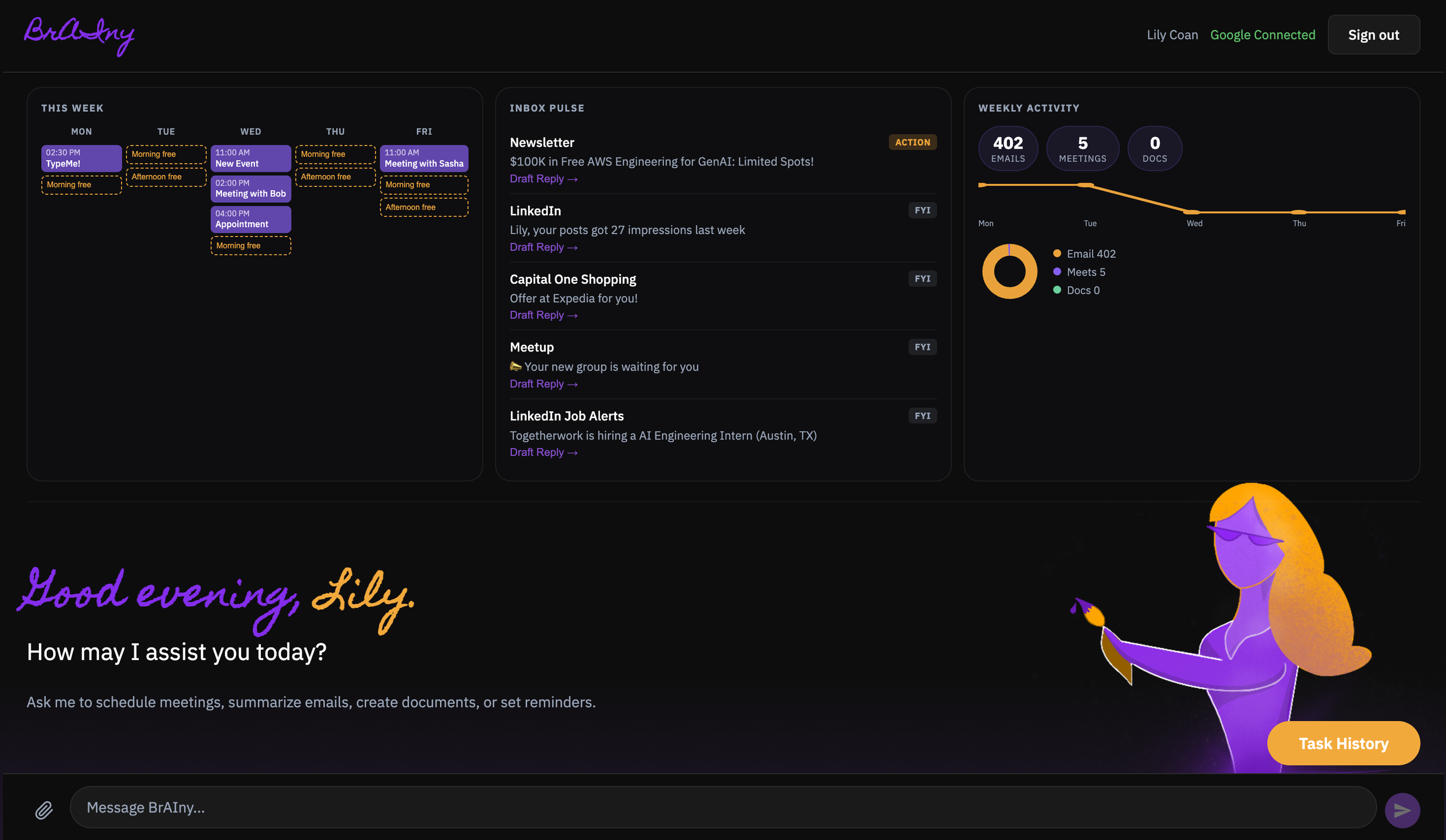
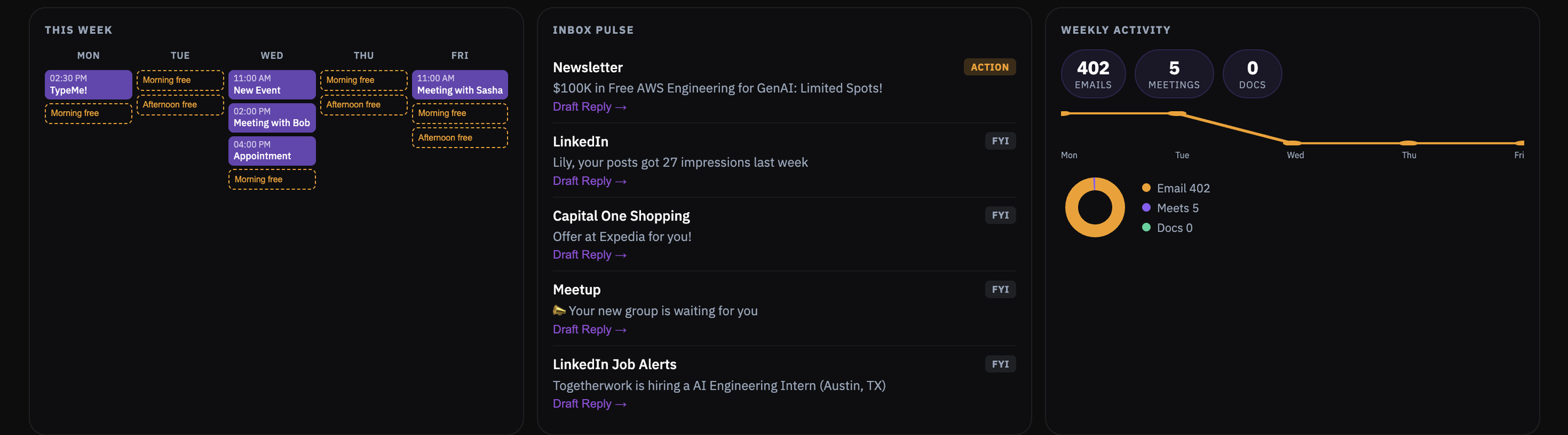
Personal dashboard surfacing real Calendar free/busy slots, Gmail inbox with async AI-classified urgency tags, and a weekly activity breakdown via sparkline and donut chart
Autonomous execution across Calendar (scheduling), Gmail (read, summarize, draft, send), and Google Docs (generate, organize)
Toolkit

Figma

Google Cloud Platform and Google APIs

VS Code and Claude Code

Firebase
The Challenge
Managing everyday digital tasks, like scheduling meetings, responding to emails, and organizing documents, requires constant context switching and manual effort. Users lack a centralized assistant that can understand both text and visual inputs, maintain context, and proactively take action on their behalf.
My Role
Ideation, UI/UX, Web Design, Research, Development
Timeline
Spring 2026
Research Overview
We can only know if AI has subjective experiences through a third-person lense- We know we have conscious throigh first-person. Humans have trouble understanding what conscious really is and therefore, how would we know if AI is capable of having it? Is it aware it is making decisions?
There is phenomenon consciousness (experience in mental state) and access consciousness (guiding behavior) and we need to focus on access for AI.
There are two dimensions of conscious computation: 1. Global availability (info available to the organism, resembles access) and 2. Self-monitoring (introspection). We use these to build conscious for AI.
Humans tend to do anthropomorphizing, especially with robots, even if they are not conscious and limited in info.
Therefore, in the area of AI and Human Consciousness, I am studying AI integration in business because I want to find out its current capabilities and future potential in order to understand how subjective AI experiences could reshape business.
Do you think any robots/AIs that currently exist are sentient?
AI Integration into Business
Relevance
Explores whether AI systems like LLMs could develop forms of consciousness.
Establishes philosophical ideas for subjective experience.
Differentiates between intelligence, simulation, and phenomenology.
Why It Matters for My Prototype
My prototype studies AI integrated into business workflows.
If AI were to develop subjective-like properties:
Decision-making frameworks would need ethical layers.
Businesses would require new governance models.
Liability and rights structures may shift.
Relevance
Tracks real-world enterprise AI adoption.
Shows where AI currently operates: automation, augmentation, decision support.
Identifies industry verticals integrating AI most rapidly.
Integrated Into Prototype
AI is primarily augmentative, not autonomous.
Businesses use AI for:
Workflow optimization
Pattern detection
Predictive modeling
Internal knowledge systems
AI in Business
The Solution
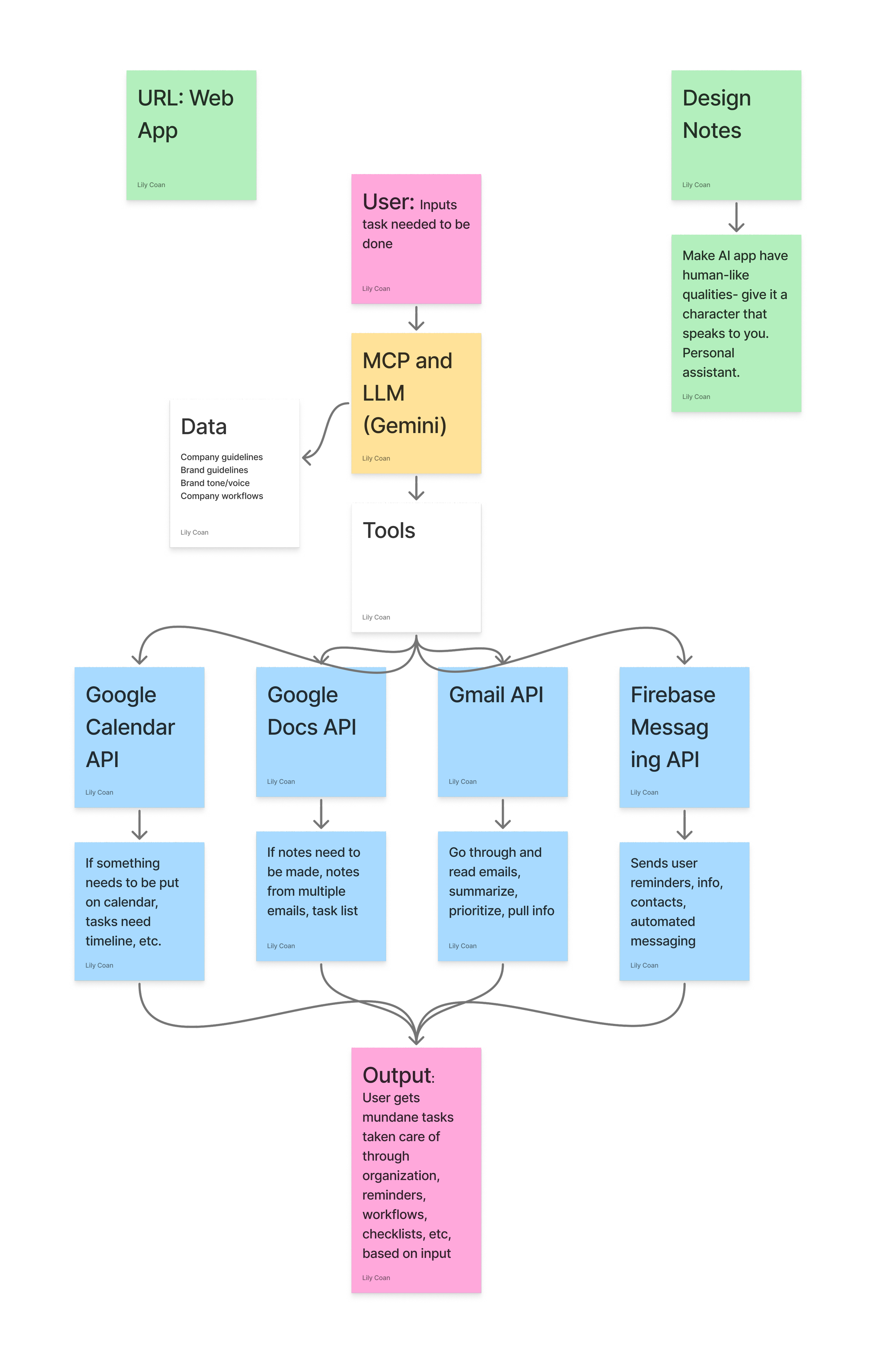
AI-powered assistant that interprets multimodal input and automates workflows across Google Workspace using Gemini (Vertex AI), enabling productivity through augmentation rather than full autonomy.
The User Flow
The Process
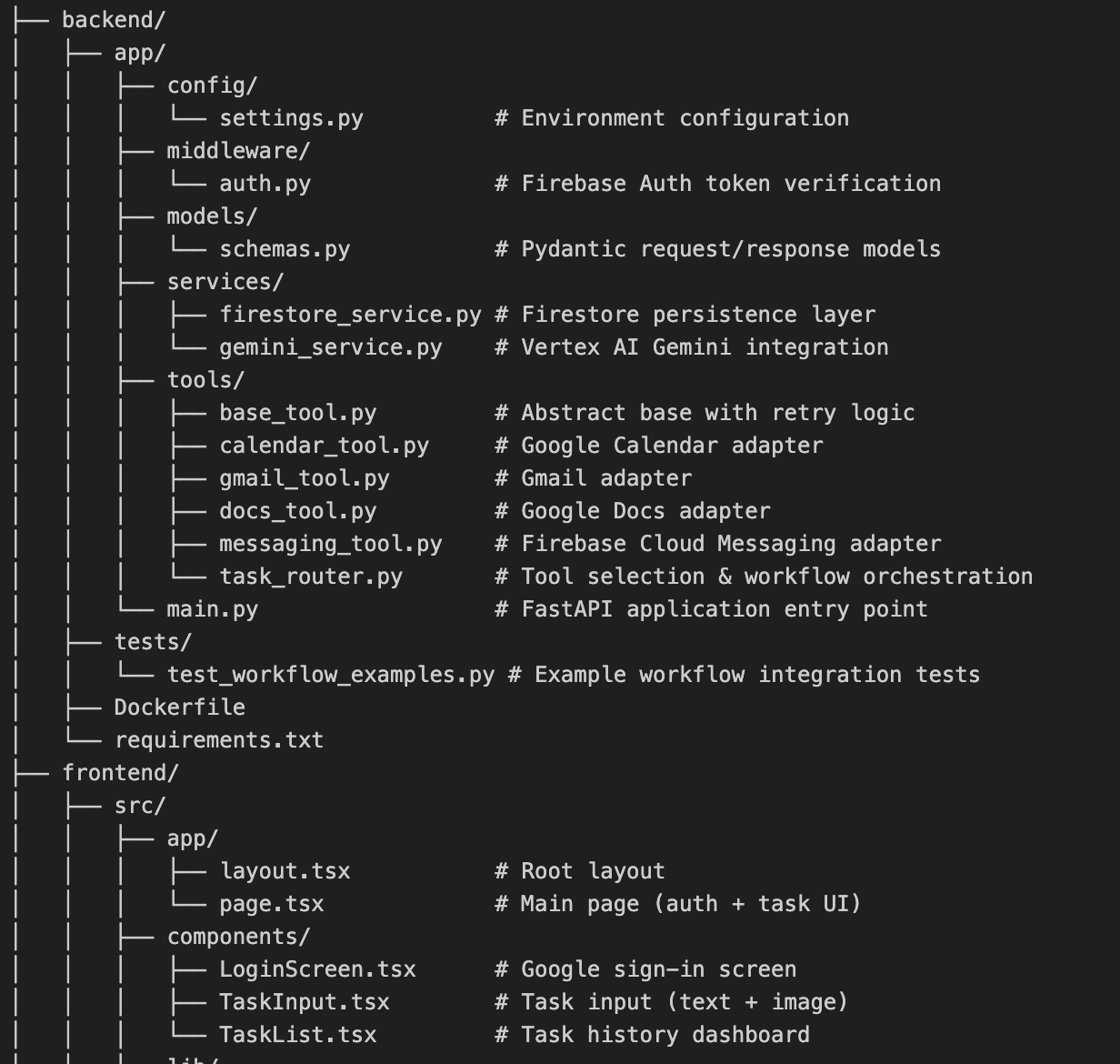
I first drew my character in Procreate and then designed the UI within Figma. Here, I enabled the Figma Model Context Protocol to transfer design data with Claude and implement it into my codebase.
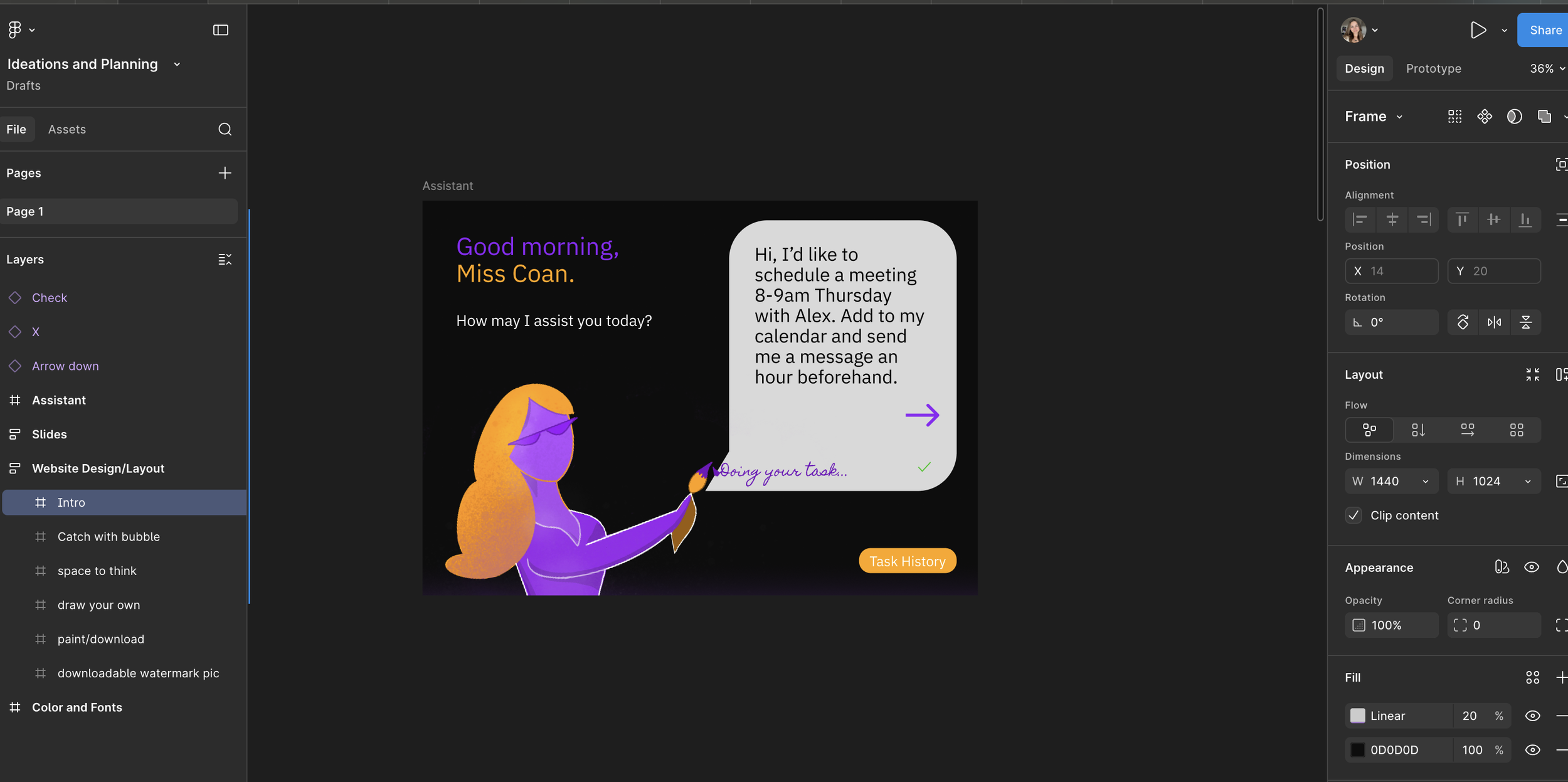
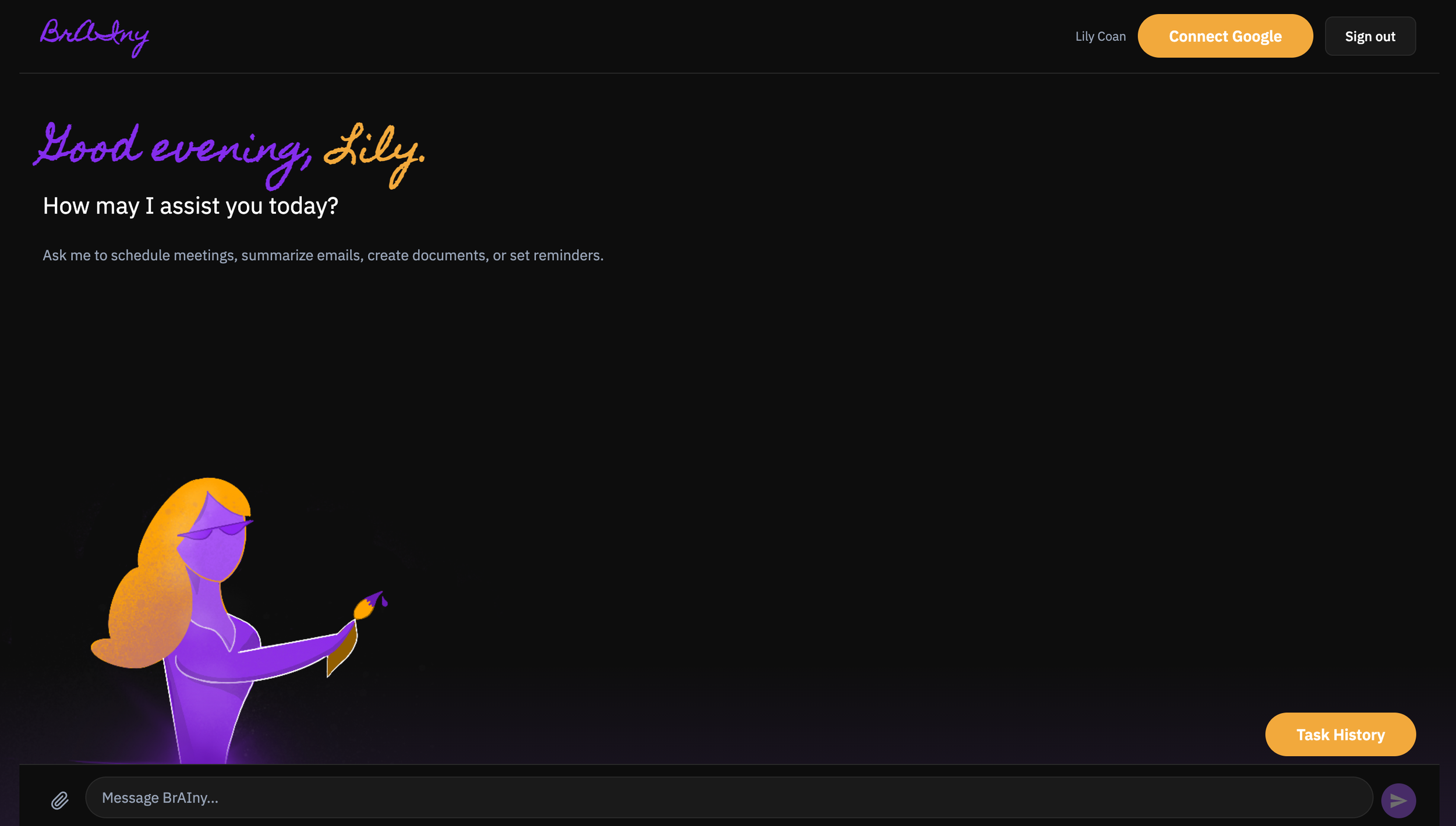
Here is how it looks implemented the first time around.
Usability Testing:
University of Texas at Austin AET Showcase, ‘Amplify’
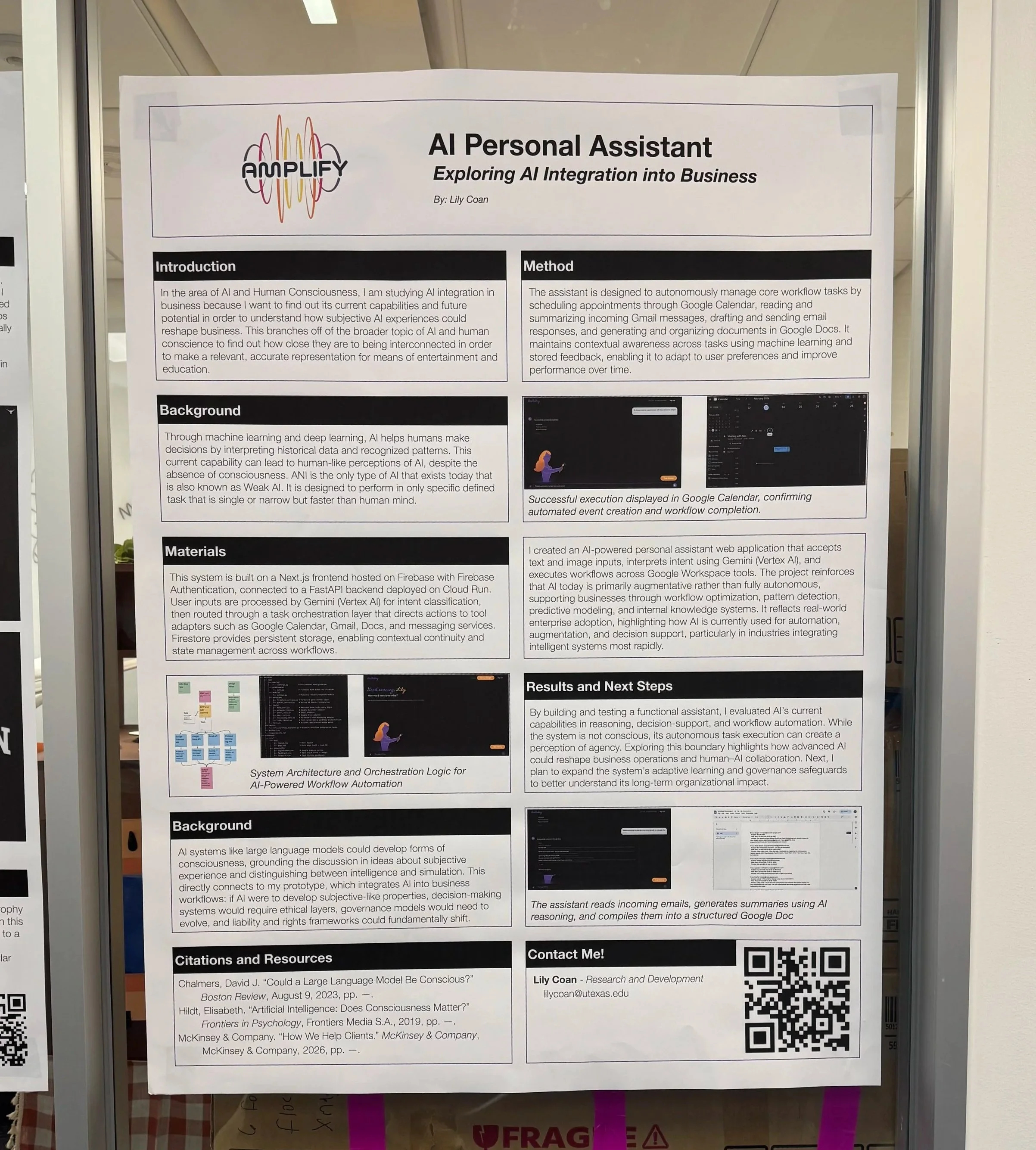
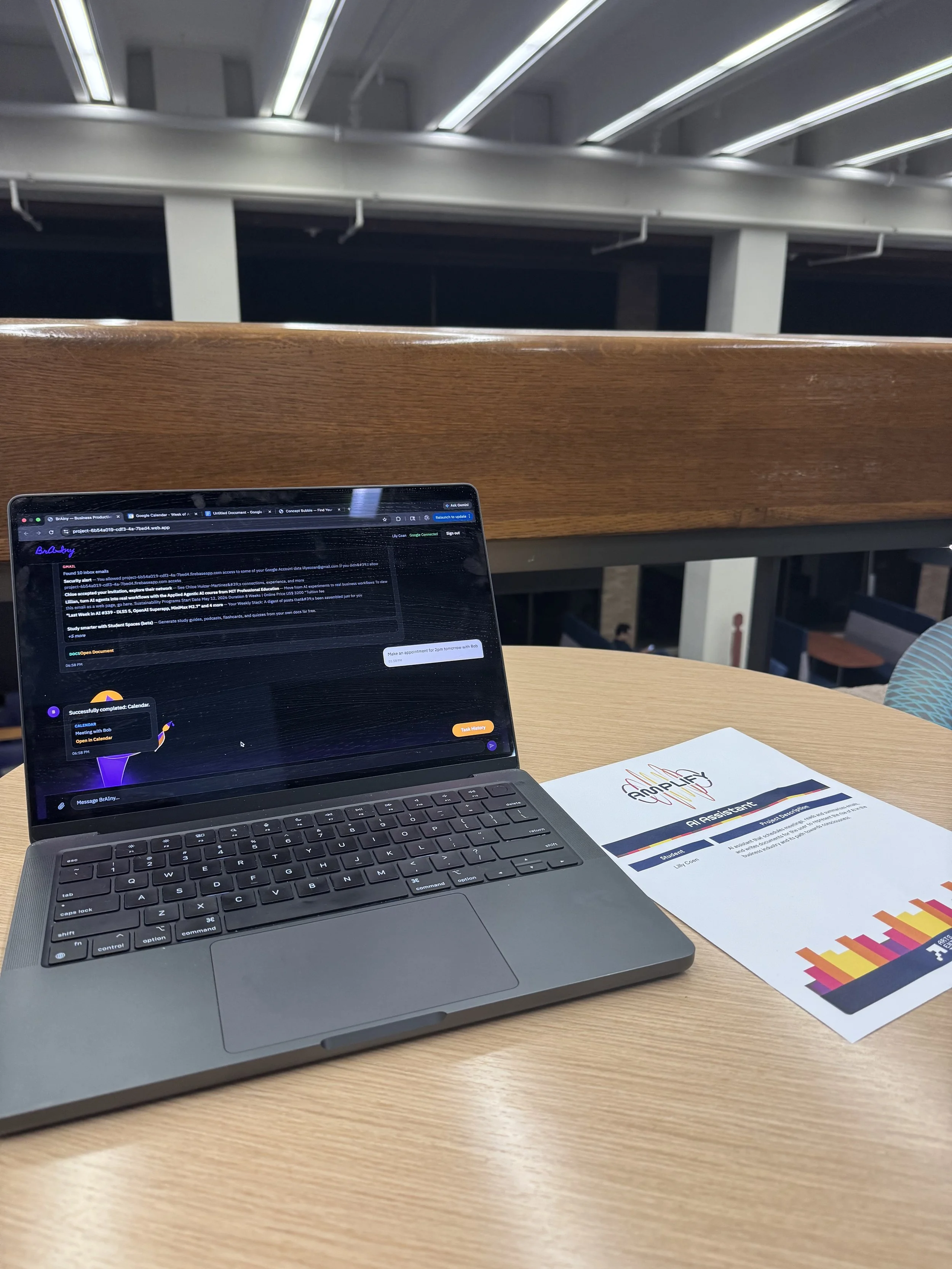
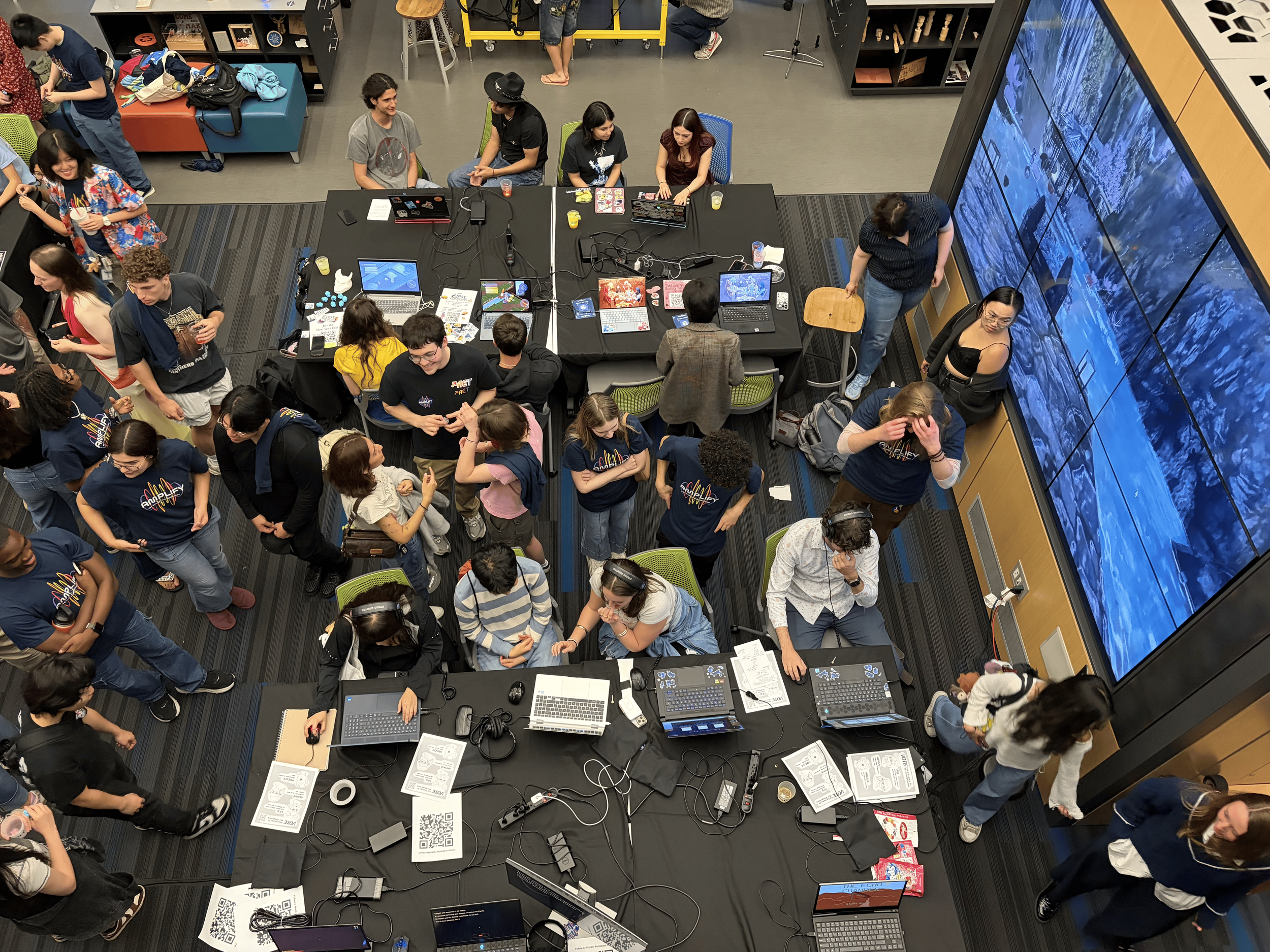
Before and After User Testing
The Before
The functionality was limited to executing tasks within the Google Workspace such as scheduling appointment, making documents, summarizing emails, etc.
Users liked how anyone with a Google Account could use this web application, the UI, the concept and the idea of a tool to help people stay organized, and how accurate it was.
I got feedback that users were still needing to manually switch tabs and navigate through Google Workspaces, it was not very personalized, and some people explained how, as visual learners, would like some sort of visual/integrated graphs.
The After
Extended BrAIny from a single-prompt task executor into a fully conversational, context-aware assistant. Integrated Firestore to persist each authenticated user's conversation history, open tasks, and recent actions across sessions. BrAIny can resolve follow-ups like "reschedule that" because it remembers what was last discussed.
Built a real-time personal dashboard in the previously empty UI space: a live Google Calendar week view with clickable free slots, an async-classified Gmail inbox pulse with urgency tagging (URGENT / ACTION / FYI) that loads without blocking the page, and a weekly activity panel with a sparkline and donut chart pulled from Calendar and Gmail APIs.
The Final Walkthrough
We bring creativity and expertise to everything we do.
Here, creativity meets opportunity. Whatever you're building, we're here to help you take the first step with confidence.
Impact and Results
BrAIny is currently in active user testing, with early demo sessions suggesting significant reductions in time spent on routine Workspace tasks, estimated 85–90% faster scheduling and email triage compared to manual workflows. The next phase focuses on scaling the app for full deployment: hardening the Google OAuth flow for multi-user production, stress-testing Firestore session persistence across concurrent users, and refining Gemini's contextual reasoning on real, varied conversation patterns gathered from testers. The goal is a deployable, user-ready product that functions as a persistent AI layer on top of Google Workspace, one that learns user preferences over time and handles the administrative overhead that interrupts deep work.
Time Reduction Using brAIny
Reflecting…
This project supports my research on AI and human consciousness by exploring AI’s current business capabilities and how increasingly advanced systems could reshape perceptions of intelligence, agency, and decision-making in professional environments.
By building and testing a functional assistant, I am evaluating AI’s present capabilities in reasoning, decision-support, and workflow automation. Although the system does not possess consciousness, its ability to interpret context and act autonomously can create the perception of agency. Studying this boundary between task execution and perceived understanding helps explore how increasingly advanced AI systems (potentially evolving toward AGI) could reshape business operations, decision-making processes, and human-AI collaboration.